Body Awareness Through Play – Learning with the Whole Body in Focus

Body Awareness Through Play – Learning with the Whole Body in Focus
When children play, they don’t just learn with their minds – they learn with their whole bodies. Movement, sensory experiences, and physical exploration are essential to children’s development, supporting not only their physical growth but also their emotional and social well-being. In a time when much learning happens in front of screens, it’s more important than ever to make room for play that strengthens body awareness. Let’s take a closer look at how play can become a natural path to learning with the body at the center.
What Is Body Awareness?
Body awareness is about knowing and understanding one’s own body – how it moves, reacts, and feels. For children, this awareness is a foundation for developing motor skills, balance, and coordination, but it also helps build confidence and a sense of security in themselves.
When a child learns to sense where their body is in space and how it can move, a stronger connection between body and mind is formed. This connection supports focus, learning, and overall well-being – both in school and in everyday life.
Play as a Space for Learning
Play is children’s natural way of exploring the world. Through play, they learn to cooperate, solve problems, and use their bodies in new ways. When learning is combined with play, abstract ideas become easier to grasp because children experience them physically.
For example, children can learn about shapes and sizes by building them with their bodies – forming a triangle with arms and legs or creating a circle together with friends. This makes learning tangible and sensory.
Play also strengthens social skills. When children play tag, ball games, or imaginative role-play, they practice reading others’ signals, taking initiative, and showing empathy – all through physical interaction.
Movement in Everyday Life – Small Steps, Big Impact
Body awareness doesn’t require special equipment or large spaces. It’s about weaving movement into daily routines. Here are a few simple ways to do that:
- Start the day with movement – do a few stretches or a short dance before the day begins.
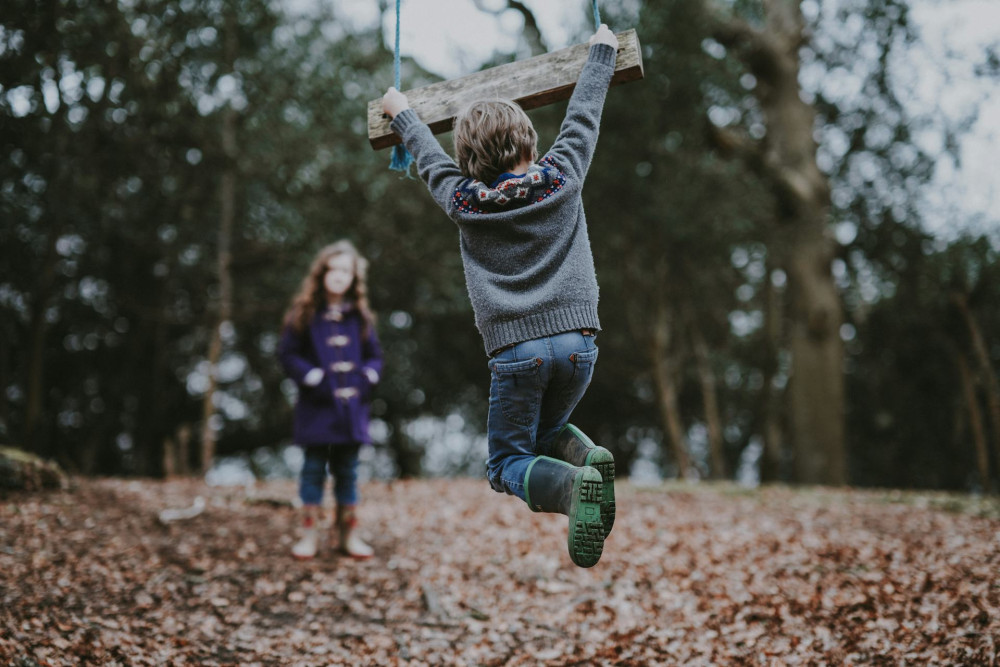
- Use the outdoors – walk on uneven ground, balance on logs, or jump over puddles. Nature offers endless opportunities to challenge balance and coordination.
- Play with rhythm and music – clap, stomp, or move to a beat. This develops rhythm, timing, and body control.
- Create movement breaks – short play breaks during the day can boost focus and energy.
Even small changes can make a big difference in children’s physical awareness and overall well-being.
The Connection Between Body and Learning
Research shows that children learn better when they can move. Physical activity stimulates the brain, increases blood flow, and strengthens memory. When children are allowed to move while learning, they become more engaged and motivated.
For instance, math lessons can include jumping on number grids, or spelling can be practiced by forming letters with the body. These activities make learning come alive and anchor it in real experiences.
Læs også:

Confidence and Self-Understanding Through the Body
Body awareness isn’t just about physical ability – it’s also about feeling at home in one’s own body. When children learn to notice how they feel – whether they’re tense, tired, or excited – they gain a language for their needs and boundaries.
This awareness can help prevent stress and emotional difficulties. Through play and movement, children can learn to regulate themselves: to calm down when they’re restless or to release energy when they need to move.
Play as a Shared Experience
Physical play also builds community. When children play together, they connect through laughter, teamwork, and shared experiences. This strengthens relationships and fosters a sense of belonging. Parents, teachers, and caregivers can join in – not as instructors, but as play partners.
When adults show that it’s okay to move, make mistakes, and laugh, they create a safe space where children feel free to express themselves. That’s where body awareness truly grows.
A Holistic Approach to Learning
Fostering body awareness through play is ultimately about seeing the child as a whole person – with body, mind, and emotions that are deeply connected. When we make room for movement, sensory experiences, and play, we support not only children’s physical development but also their ability to learn, thrive, and understand themselves.
The body is not just a tool – it’s part of who we are. And when children learn with their whole bodies, learning becomes deeper, more joyful, and more meaningful.
Læs også: